You're Winning and It Still Feels Wrong: The Psychology Behind Crypto Betting's Endless Loop
Let's say you started the week with 0.05 ETH in your wagering wallet. By Thursday, you've run it up to 0.09 ETH. By any reasonable measure, you're ahead. You've beaten the house — or in this case, the protocol. So why does it feel like you haven't won anything at all?
If that sounds familiar, you're not alone, and you're not broken. What you're experiencing is the product of some very specific design choices baked into blockchain-based wagering platforms — choices that interact with your brain's existing quirks in ways that are genuinely hard to resist. Understanding those mechanics won't make you immune, but it's a lot better than walking into the trap blind.
The Frictionless Problem Nobody Talks About
Traditional online gambling — the kind you'd find on a licensed sportsbook or a casino app — comes with natural speed bumps. Withdrawal requests take 24 to 72 hours. There are identity verification steps. Sometimes there are minimum cashout thresholds. These aren't just regulatory annoyances; they're accidental circuit breakers. They give you time to think.
Decentralized wagering platforms operate on a fundamentally different rhythm. Settlement is near-instant. Your winnings hit your connected wallet in seconds. There's no support ticket, no pending review, no waiting period. That sounds like a feature — and technically it is — but it also eliminates the pause that might otherwise prompt you to ask: do I actually want to keep going?
When the gap between winning and your next bet is measured in seconds rather than days, the natural moment of reflection disappears. The money never really feels like money. It feels like chips that are already in play.
On-Chain FOMO Hits Different
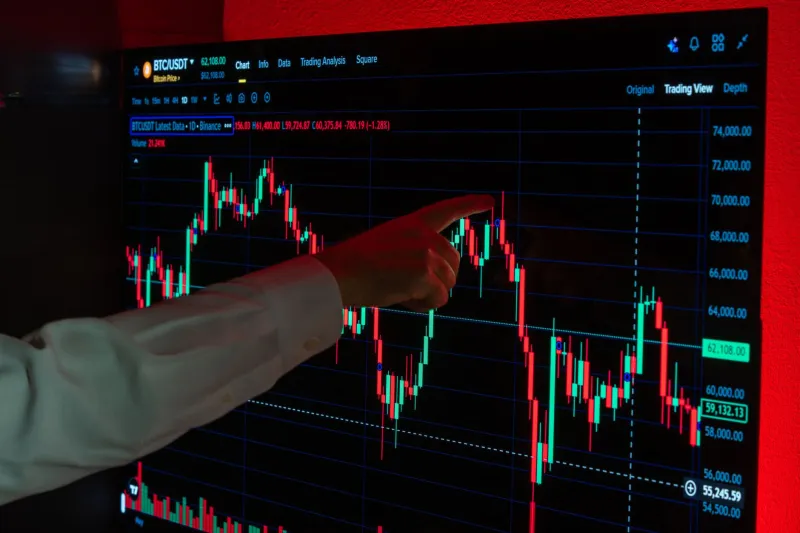
Fear of missing out is nothing new in gambling psychology, but blockchain markets add a layer that traditional platforms don't have. Crypto wagering pools are live, public, and constantly moving. You can watch liquidity shift in real time. You can see other wallets entering positions. You can observe odds drifting as new bets pile in.
That visibility creates a specific kind of pressure that's hard to articulate but easy to feel. It's the sense that something is happening right now and you're watching it from the sidelines. Even when you've just won and the rational move is to step back, the market's constant activity makes inaction feel like a choice you're actively losing.
This is FOMO operating at blockchain speed — and it's particularly potent because, unlike a sports betting feed or a casino lobby, the on-chain data is real. The activity is genuine. That makes the pull feel more legitimate, even when acting on it isn't in your interest.
Loss Aversion Gets Rewired
Behavioral economists have known for decades that losses hurt roughly twice as much as equivalent gains feel good. That's loss aversion, and it's one of the most reliable quirks in human decision-making. Traditional gambling exploits it in one direction: you chase losses because the pain of being down outweighs your rational judgment.
Crypto betting platforms can flip this on its head in an interesting way. When your balance is denominated in a volatile asset — say ETH or BTC — a winning session can start to feel like a loss if the underlying asset drops in value after you've won. You're up in token terms but down in dollar terms, and suddenly your brain is treating a winning session like a deficit that needs to be recovered.
The reverse is also true. If ETH pumps while you're winning, you might feel like your gains are smaller than they should be because you're mentally benchmarking against a moving target. Either way, you end up in a headspace where winning doesn't feel like enough — and that feeling is a direct line to the next bet.
The Reinvestment Reflex
There's a specific behavior pattern worth naming: the automatic reinvestment reflex. It goes like this — you win, the funds settle to your wallet, and without really deciding anything, you're already allocating them to the next position. The wins never leave the ecosystem. They just become the bankroll for the next session.
This isn't unique to crypto, but the on-chain environment amplifies it. When your funds are already sitting in a connected wallet, moving them back to an exchange or a bank account requires deliberate action. Staying in the game requires nothing. Inertia does the work for the platform.
One practical way to counteract this: treat every withdrawal as a default, not an exception. Instead of asking yourself "should I cash out?" after a winning session, flip the script and ask "why am I not cashing out?" If you can't answer that question clearly, the answer probably should be to move the funds.
Recognizing the Loop Before It Closes
There are a few signals worth watching for. If you've been in a winning position for more than one session and your balance hasn't actually grown, you're likely in the loop. If you feel a sense of relief when you lose — because now you have a concrete reason to keep playing — that's a significant red flag. If the idea of withdrawing your profits feels vaguely uncomfortable or wasteful, that discomfort is worth examining.
Setting hard session limits before you connect your wallet is one of the more effective structural fixes. Not a loss limit — a time limit. Decide in advance that after a certain number of hours, you're done regardless of where your balance sits. The session end becomes a predetermined off-ramp rather than a decision you have to make in the middle of an active market.
Some bettors also find it useful to assign a mental exchange rate to their token winnings early in a session — essentially converting to dollars in their head and committing to what a "good outcome" looks like before they start. It's easier to recognize when you've hit your target if you defined the target before FOMO was in the room.
The Platform Isn't Rooting Against You — It Just Doesn't Need To
This is worth saying clearly: blockchain wagering platforms don't need to manipulate you. The architecture does enough on its own. Instant settlement, transparent on-chain activity, and volatile underlying assets create a cocktail of psychological pressure that keeps even disciplined bettors in the game longer than they planned.
None of that makes these platforms bad. Decentralized wagering is genuinely interesting technology, and for users who approach it with structure and self-awareness, it can be an engaging and fair environment. But "fair" doesn't mean "neutral" when it comes to how the experience is designed. The loop is real, and knowing it exists is the only honest starting point.
Win or lose, the most important moment on any wagering platform is the one where you decide to stop. Make sure that decision is actually yours.